
How should agencies prepare a weekly client performance report?
· 8 min read
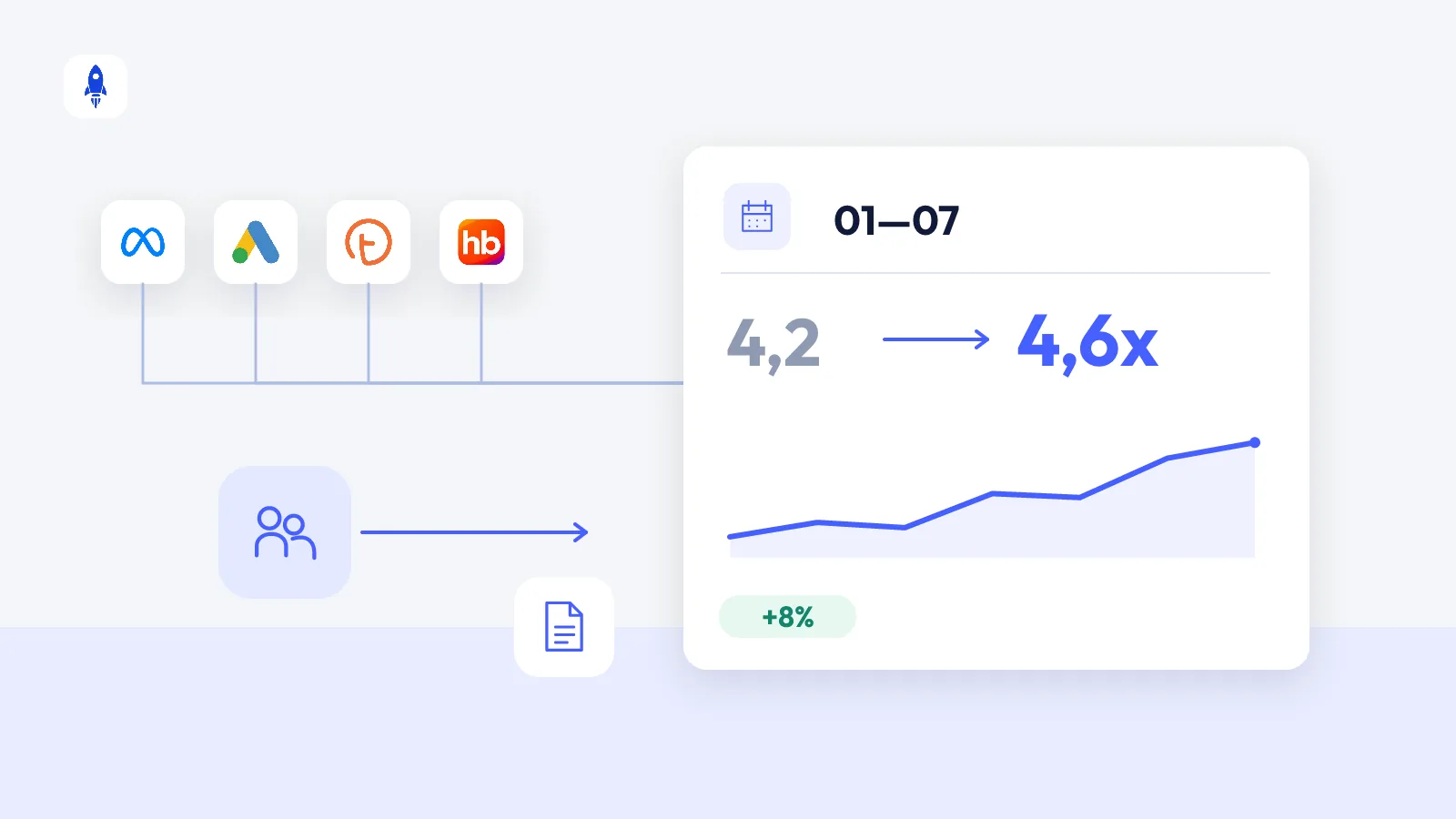
A good weekly client report isn't a pile of numbers — it's a short story: what happened this week, why, and what we'll do next week. Giving the client the 4–6 metrics they care about, compared with the previous period and with commentary, is enough.
What do clients expect from a report?
Brand owners don't need to know their way around ad platforms. What they want from a report is the answer to three questions:
- What did our money bring in? Spend, revenue and return.
- Are we doing well? Status against the previous period and the target.
- What's next? The agency's plan for the coming period.
A report that doesn't answer these clearly won't build trust, however many charts it has.
Which sections should a weekly report have?
1. Summary (at the top, 3–4 sentences)
“Total revenue rose 8% this week while ad spend stayed flat; ROAS went from 4.2 to 4.6. The new-season campaign drove the increase.” Even if the client reads only this section, they should understand where things stand.
2. Key metrics (compared with the previous period)
- Total revenue (website + marketplaces)
- Total ad spend
- ROAS (or blended ROAS)
- Number of orders and average order value
- New customers / cost per conversion (depending on the goal)
Show the change versus the previous period next to each metric. We cover which metrics matter in our e-commerce KPI guide.
3. Channel breakdown
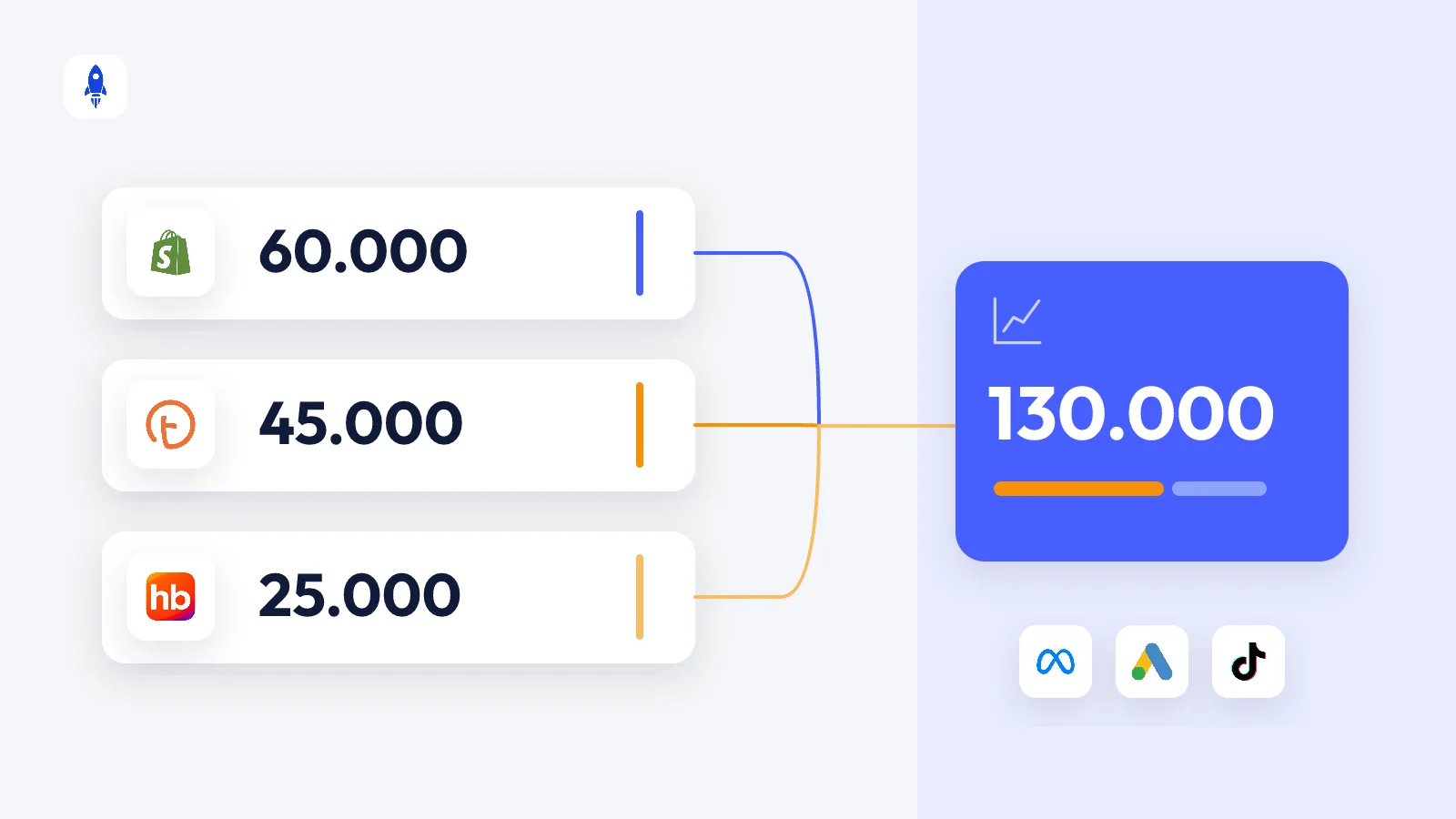
How much did each ad channel spend, and how much revenue did each sales channel bring? Show Meta, Google and TikTok, and the website and marketplaces, on separate lines. Including marketplace sales makes the real effect of ads visible (our marketplace article).
4. Highlights and issues
The best-performing campaign or creative, any campaign whose performance dropped and why. Keep it short and honest; reports that hide problems erode trust in the long run.
5. Next week's plan
Budget changes, new creative tests, campaigns to switch off. Clearly flag decisions that need the client's approval.
How should the commentary be written?
- Write the meaning, not the number. Instead of “CTR 1.2%”, say “ads are getting fewer clicks than last week; we're planning a creative refresh.”
- Explain cause and effect. “Spend rose but revenue stayed flat because the new campaign is still in its learning phase.”
- Cut the platform jargon. Either explain terms the client won't know or don't use them.
- Use the same definitions. Is revenue VAT-inclusive? Are returns deducted? Report with the same definitions every week.
What if platform and store numbers differ?
This is where clients get most confused: Meta says 120 sales, the store shows 95 orders. Show both numbers in the report and explain the difference once. We explain what each number is for in why ad and store data don't match. Using the store-level figure for budget and return discussions reduces arguments.
Weekly or monthly?
- Weekly report: Short — status, change and plan. For operational decisions.
- Monthly report: More comprehensive — evaluation against targets, channel strategy, next month's budget.
For small-budget clients, weekly figures can look very volatile; a fortnightly rhythm may make more sense.
How can you cut report preparation time?
At many agencies, the longest part of the weekly report is collecting data: logging into each platform, copying numbers into a spreadsheet, drawing charts. That time multiplies as the portfolio grows.
- Use a template. The same section order for every client; only the numbers and commentary change.
- Collect data automatically. A tool that brings ad, store and marketplace data together removes manual collection.
- Give clients live access. If clients can see up-to-date numbers in their own dashboard, the report can focus on commentary and the plan.
That's why CiroFly brings all of an agency's clients into one dashboard, opens a dashboard for each client showing only their brand, and prepares the report as a PDF in one click.
Frequently asked questions
Which metrics should an agency client report include?+
Total revenue, total ad spend, ROAS, number of orders and average order value are the core metrics, all compared with the previous period. Depending on the client's goal, new customers or cost per conversion can be added.
How long should a weekly report be?+
A one-page summary is enough for most clients: a 3–4 sentence summary at the top, key metrics, channel breakdown, highlights and next week's plan.
If ad platform and store numbers differ, which should the report use?+
It's best to show both and explain the difference once. Use the store-level figure for budget and return evaluation, and the platform figure for comparing campaigns.
How can I reduce the time it takes to prepare client reports?+
Using a fixed template, collecting data automatically in one dashboard and giving clients a dashboard with up-to-date numbers cut report time significantly.
See your ad, store and marketplace data in one dashboard
CiroFly combines your sales and ad channels and updates ROAS, revenue and channel breakdowns automatically every day.
Related articles

How to calculate ROAS in e-commerce — and what is a good ROAS?
The ROAS formula, how to work out break-even ROAS, how VAT and returns affect it, and how to set a target ROAS for your brand step by step.

Why don't Meta and Google sales match your store?
Seven reasons ad platform sales differ from your store revenue, how much difference is normal, and which number to base decisions on.
How to count marketplace sales in your ad performance
Measuring how Meta and Google ads affect sales on marketplaces like Trendyol, Hepsiburada and n11 — reading it correctly with blended ROAS, MER and channel share.