
How to set an e-commerce ad budget — and split it across channels
· 8 min read
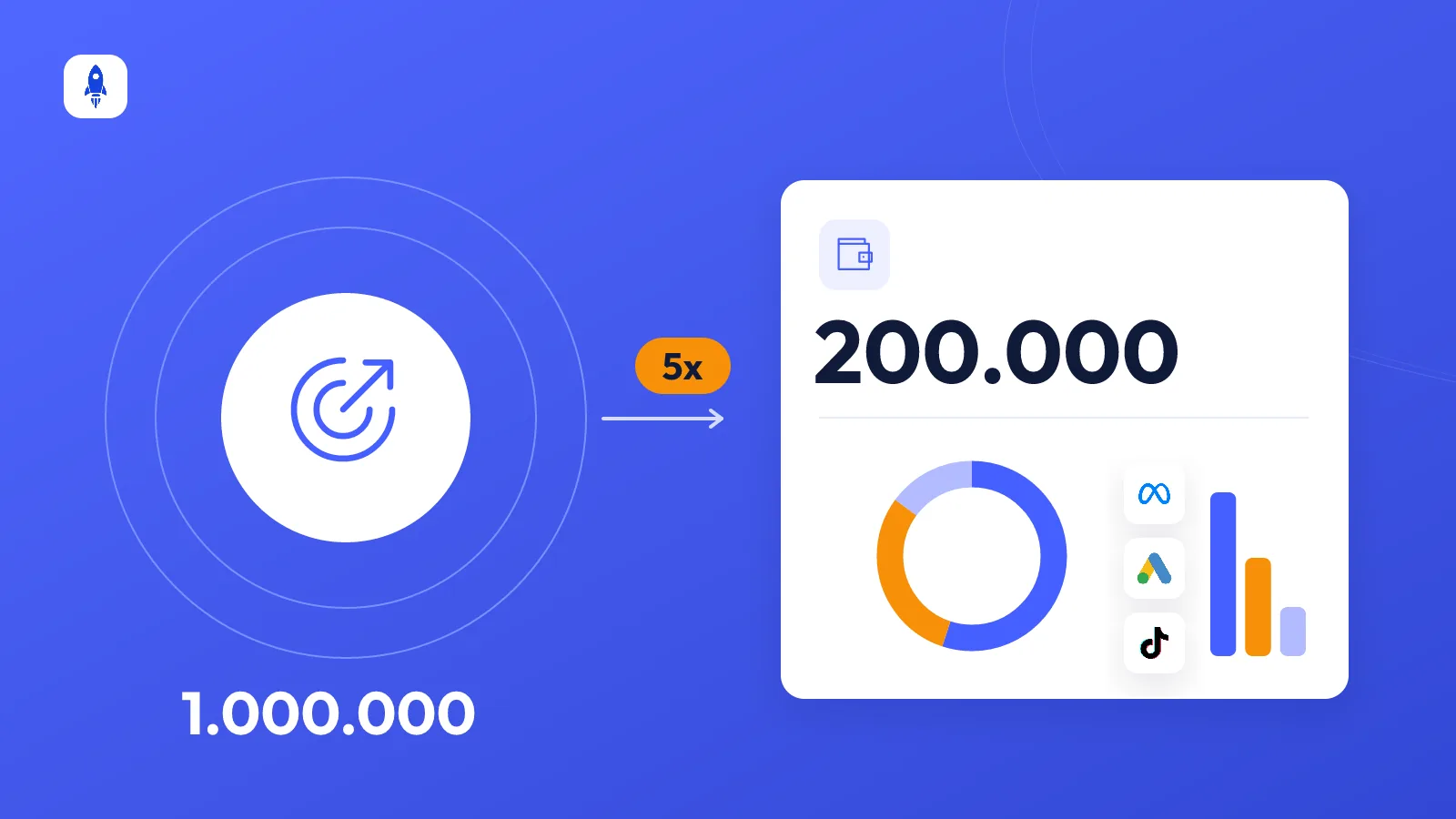
It's healthier to work out your ad budget backwards from a revenue target and target ROAS than to use a “percentage of revenue” rule: a 1 million monthly revenue target at a target ROAS of 5 needs roughly 200,000 in ad budget. You then re-split it every month based on each channel's real return.
What should an ad budget be based on?
Rules like “spend 10% of revenue on ads” give a starting point but ignore your brand's margin and growth goal. The healthier method is to work the budget out backwards from your goals.
Working backwards from a revenue target
- Set the revenue you want ads to drive. For example, 1,000,000 in ad-driven revenue next month.
- Set your target ROAS. A realistic value above break-even for your margin — say 5.
- Divide: 1,000,000 ÷ 5 = 200,000 ad budget.
We explain how to find break-even and target ROAS in our guide to calculating ROAS. This calculation gives you a starting point; real ROAS becomes clear in the first weeks and the budget is adjusted accordingly.
How do you start a budget for a new brand?
Without historical data you can't know your target ROAS. In that case:
- Set aside a learning budget. For the first 2–4 weeks, use a budget large enough for the platforms' algorithms to learn but one that doesn't strain you.
- Run a small number of campaigns. Splitting the budget across many small campaigns makes it harder for each to exit the learning phase.
- Review weekly. Decide on at least weekly results, not daily swings.
How do you split budget between Meta and Google?
The channels play different roles:
- Google Search and Shopping: Captures people already searching for your product and close to buying. Volume is capped by search demand.
- Meta (Facebook, Instagram) and TikTok: Create demand, reaching people who don't know your product yet. There's a lot of room to scale.
A common starting approach is to give Google enough budget to cover search demand and put the remaining growth budget into social channels. After that, you allocate by real return: budget moves to whichever channel is above break-even and can still scale.
When should you increase budget?
- When ROAS has been consistently above target for several weeks,
- When campaigns have completed the learning phase,
- When stock and operations can handle more orders,
increase budget gradually. Big one-off jumps can force the algorithm to re-learn and temporarily push costs up. Weekly increases in the 15–25% range are a safe rhythm for most teams.
When should you cut budget?
- When ROAS stays below break-even and doesn't recover even after a creative refresh,
- When you move out of season (demand naturally drops),
- When key products go out of stock.
Cut gradually too, starting with the weakest campaigns. If you also sell on marketplaces, watch marketplace revenue after the cut — ads may be influencing it as well (our marketplace article).
Seasonal budget planning
Some periods of the year (November sales, New Year, Mother's Day, back-to-school) see both demand and ad costs rise. Plan budgets ahead and launch campaigns before the season starts so they finish learning in time. You'll find a detailed plan for November in our November sales season article.
Which reports do you need to track budget?
- Daily spend tracking: Planned vs actual spend, budgets running out.
- Weekly channel report: Each channel's spend, ROAS and share of total revenue.
- Monthly target review: How close you got to revenue and ROAS targets.
Seeing spend from every ad channel on the same screen as store and marketplace revenue speeds up budget decisions. CiroFly offers this view for each brand in a single dashboard.
Frequently asked questions
What percentage of revenue should an e-commerce brand spend on ads?+
There's no fixed ratio. It's healthier to divide your revenue target by your target ROAS: a 1,000,000 revenue target at a target ROAS of 5 needs a 200,000 budget.
Should Meta or Google get budget first?+
Google Search captures people already searching and its volume equals demand; Meta and TikTok create new demand. Usually search demand is covered first and the remaining growth budget goes to social, then allocation follows real return.
How fast should ad budget be increased?+
Gradual increases are safer. Weekly increases of 15–25% largely avoid sending the algorithm back into learning and temporary cost spikes.
How do you set an ad budget for a new brand?+
Without history, set aside a learning budget for the first 2–4 weeks, run few campaigns, and once weekly results show your real ROAS, work the budget backwards from your goals.
See your ad, store and marketplace data in one dashboard
CiroFly combines your sales and ad channels and updates ROAS, revenue and channel breakdowns automatically every day.
Related articles

How to calculate ROAS in e-commerce — and what is a good ROAS?
The ROAS formula, how to work out break-even ROAS, how VAT and returns affect it, and how to set a target ROAS for your brand step by step.
Why don't Meta and Google sales match your store?
Seven reasons ad platform sales differ from your store revenue, how much difference is normal, and which number to base decisions on.
An ad plan for the November sales season: preparing for 11.11 and Black Friday
A November ad calendar for e-commerce brands: preparation, warm-up, campaign week and after — with budget, creative, stock and marketplace planning.